

 English
 Español


Product Consultation
Your email address will not be published. Required fields are marked *
You are pricing lumber for a ground-contact deck, and the supplier asks a short question: ACQ, CCA, or borate? If you are a contractor or a manufacturer, that single choice affects service life, fastener selection, regulatory compliance, and cost per cubic meter. The names are not interchangeable, and neither are the four families behind them.
Wood preservatives fall into four main types: water-borne systems, oil-borne systems, borate-based products, and copper-based or organic alternatives. Each protects wood against fungal decay and insects in a different way, so each one belongs in a different set of applications.
Wood fails mainly through biological attack. Fungi digest cellulose when moisture content stays above roughly 20 percent. Termites and wood-boring beetles hollow out structural members from the inside, and marine borers can destroy piles in a few seasons. A preservative changes the chemistry of the wood so these organisms can no longer feed on it.
The level of protection depends on the active ingredients and on the carrier that takes them into the wood. That is why the four types differ in penetration, leach resistance, toxicity, and final appearance. Looking at the mechanism of action helps clarify what each product can and cannot do, and it is the first step toward a sensible purchasing decision.
Water-borne preservatives dissolve active salts or oxides in water, push them into the wood under pressure, and leave the active ingredients behind when the water evaporates. This group contains the most widely used structural treatments on the market.
Chromated copper arsenate (CCA) has been used since the 1940s. Chromium fixes copper and arsenic to the wood, which gives strong protection against decay and insects. CCA remains a solid option for industrial poles and marine installations, although many residential markets restrict it because of the arsenic content. Where regulations allow, an XKCCA wood preservative provides the heavy-duty performance that this older chemistry is known for.
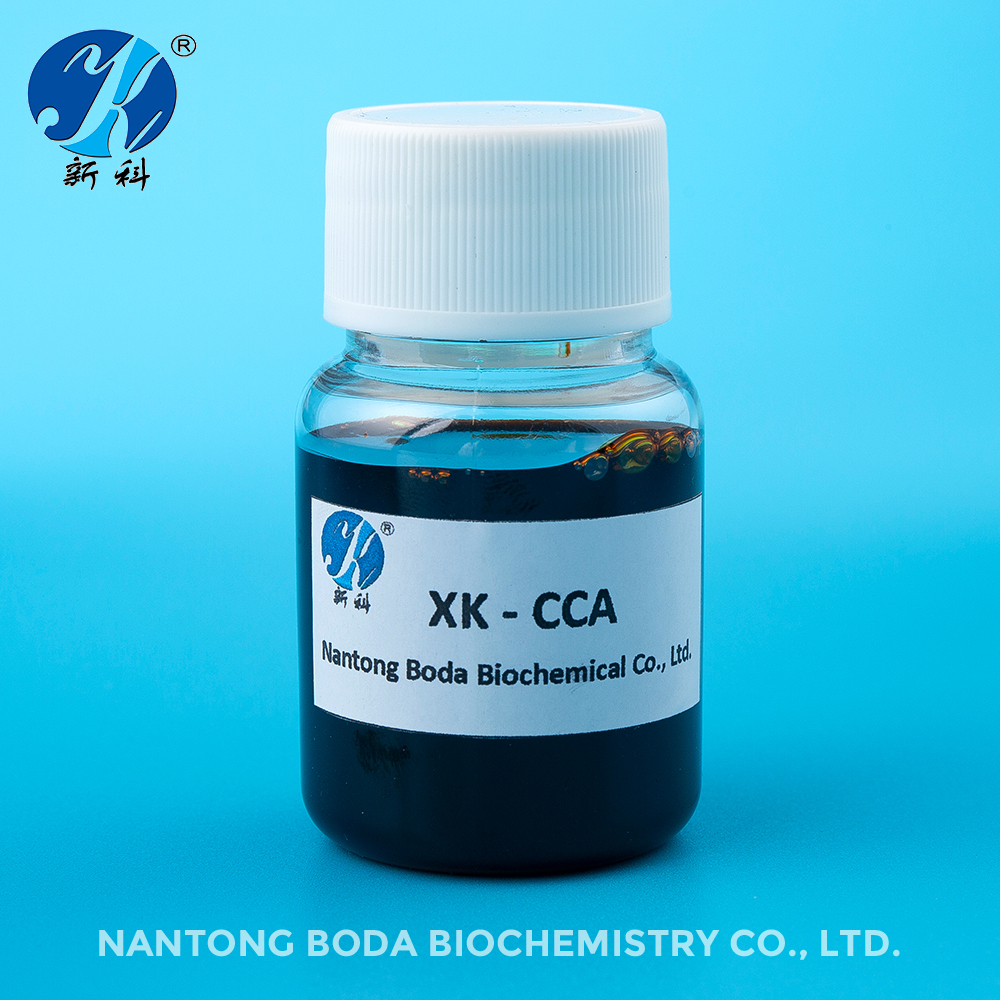 Wholesale Chromated Copper Arsenate XK-CCA Wood Preservative Manufacturers, OEMNantong Boda Biochemistry Co.,Ltd. is China Wholesale Chromated Copper Arsenate XK-CCA Wood Preservative Manufacturers and OEM/ODM Suppl...View Product →
Alkaline copper quaternary (ACQ) was developed as a CCA replacement for homes and commercial buildings. Copper supplies the fungicidal and termiticidal action, while a quaternary ammonium compound covers copper-tolerant fungi. ACQ is clean to handle, can be painted or stained, and performs well in ground contact. Our XKACQ wood preservative follows this same chemistry for applications that need dependable structural protection.
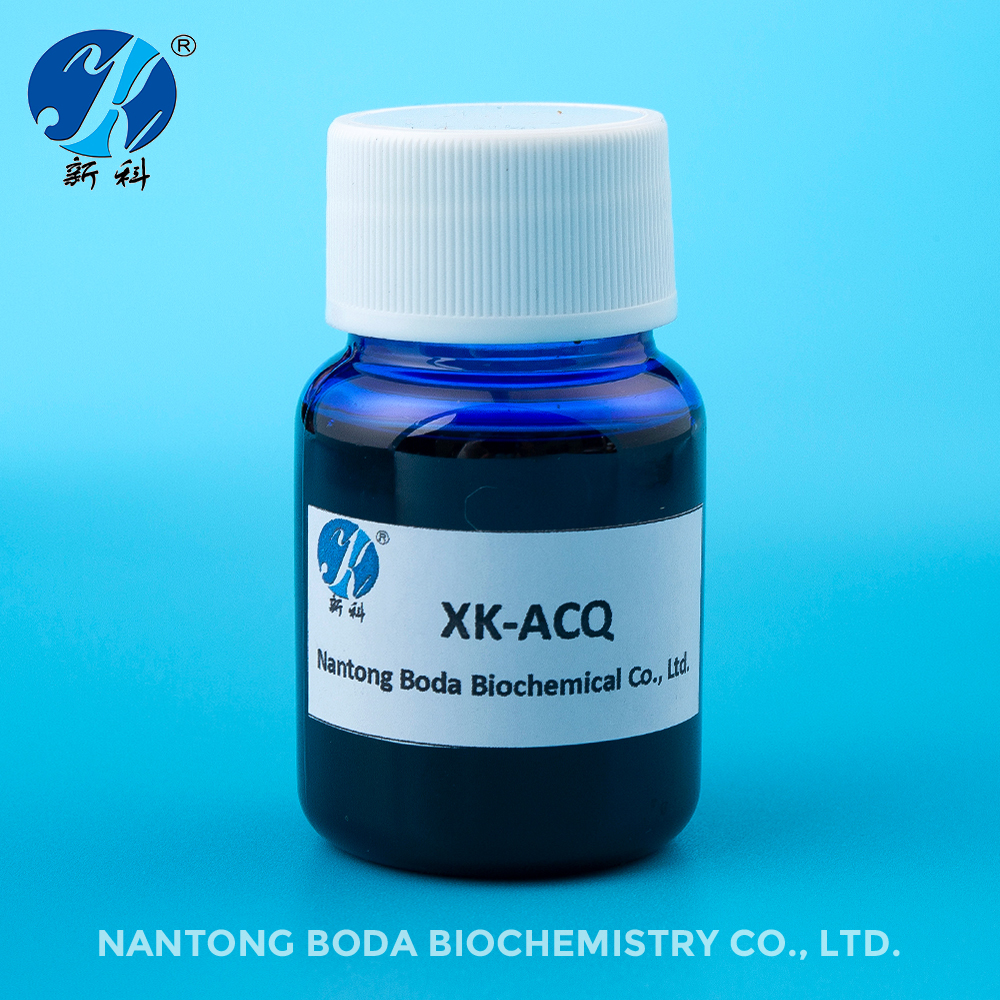 Wholesale Wood Preservatives - Ammonical Copper Quat (ACQ) Manufacturers, OEM/ONantong Boda Biochemistry Co.,Ltd. is China Wholesale Wood Preservatives - Ammonical Copper Quat (ACQ) Manufacturers and OEM/ODM Supplie...View Product →
Copper azole is the third common water-borne option. It combines copper with an organic azole fungicide, usually tebuconazole, and is used for decking, posts, and heavy framing.
The main limitation of water-borne treatments is their effect on metal. Copper deposited in the wood accelerates corrosion of unprotected steel, so builders normally specify hot-dip galvanized or stainless steel fasteners with ACQ and copper azole.
Oil-borne preservatives carry the active ingredient in an oil or petroleum solvent. The oil penetrates deeply, repels water, and stays in the wood for years. These products dominate the most severe exposures.
Creosote, derived from coal tar, is the oldest industrial wood preservative. It leaves a dark, oily surface and protects against decay, termites, and marine borers, so it is standard on railroad ties, utility poles, and bridge timbers. In most jurisdictions it is a restricted-use product, and its odor and surface oil make it unsuitable for interiors.
Pentachlorophenol, or penta, is another restricted oil-borne treatment. It controls fungal decay and appears mainly on utility poles and structural timbers. Toxicity concerns have made it one of the most regulated wood preservatives in use.
Copper naphthenate is a less restricted oil-borne option. It is common on fence posts, agricultural structures, and other wood in ground contact, and it has a milder odor than creosote while still giving broad protection through its copper content.
Borates, especially disodium octaborate tetrahydrate, form a practical family of their own. They dissolve in water, diffuse well into damp wood, and protect against a broad range of fungi and insects, including termites and wood-boring beetles. Their main advantage is safety: mammalian toxicity is low, so they are widely accepted inside homes.
The trade-off is water solubility. Borate-treated wood that stays in contact with rain or ground moisture gradually loses the active ingredient, which makes borates the right choice for interior framing, sill plates, joists, and other weather-protected locations. Borate rods and pastes are also applied to existing wood as a remedial treatment where replacing members is impractical.
Newer residential treatments suspend very small copper particles in water instead of dissolving copper salts. Micronized copper azole and micronized copper quaternary are now common in lumber yards; the fine particles penetrate the wood and release copper at the cell level, with less corrosion of fasteners than fully dissolved copper systems.
Organic azole fungicides such as propiconazole, tebuconazole, and DCOI are also used by themselves for above-ground products. They are a standard choice for millwork, joinery, and siding where exposure to moisture is limited.
For treated-wood producers, formulations that control both fungal decay and insect attack in one step save process time. An XKM6 wood preservative is built around this dual target and is intended for components that need a single reliable treatment against rot, termites, and other wood-destroying insects.
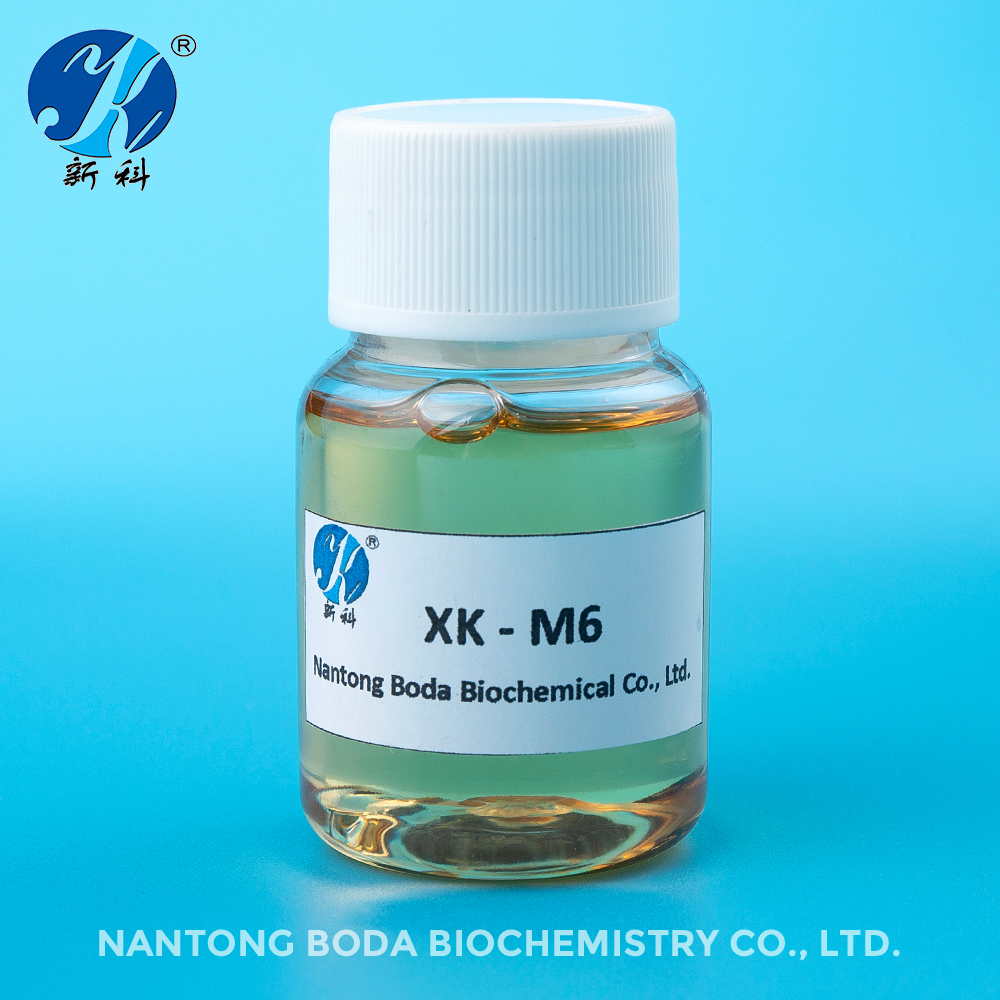 Wholesale XK-M6 Wood Protective - Protects against fungal decay and insect attacNantong Boda Biochemistry Co.,Ltd. is China Wholesale XK-M6 Wood Protective - Protects against fungal decay and insect attack, including ...View Product →
The right preservative follows the exposure class, not personal preference. In common international grading, use classes range from dry interior through above ground with moisture, ground contact, and marine service. Before ordering, answer these questions:
| Type | Examples of actives | Best for | Main limitation |
|---|---|---|---|
| Water-borne | ACQ, CCA, copper azole | Ground-contact structural lumber, decking, posts | Corrosive to unprotected steel fasteners |
| Oil-borne | Creosote, pentachlorophenol, copper naphthenate | Railway ties, utility poles, marine piling | Odor, oily surface, restricted use |
| Borate | Disodium octaborate tetrahydrate | Interior framing, joists, sill plates | Leaches out in wet or ground-contact use |
| Micronized copper / organic | MCA, MCQ, propiconazole, tebuconazole | Above-ground residential lumber, millwork | Organic-only versions less suited to severe ground contact |
Retention and penetration matter more than the brand name. Two boards can look the same, but one may carry a fraction of the active loading required for its use class. Always confirm the retention level, penetration depth, and the test method behind them.
Treatment quality is invisible at a glance. A direct wood preservative manufacturer can supply batch test reports, penetration depth data, and regulatory documentation that a trader often cannot. If a supplier cannot explain the retention level of its product, that is a warning sign regardless of the price. At minimum, ask for these four items:
Procurement teams should also plan for the application method. Pressure treatment is the standard for water-borne and oil-borne systems because it achieves deep, consistent penetration; dipping and brushing only protect the surface. Buyers who specify pressure-treated stock for ground contact but accept dip-treated material to save cost usually end up with premature decay.
Finally, verify the wood species and drying state before treatment. Dense heartwood accepts less preservative than permeable sapwood, and wet wood blocks the carrier. These factors change the dosage needed and the final cost per treated piece.
Wood preservation is not a one-size-fits-all purchase. Water-borne products carry the bulk of structural and ground-contact work, oil-borne products handle severe industrial and marine exposure, borates protect interiors with a low-toxicity profile, and micronized copper or organic systems cover modern residential needs. Match the type to the exposure, verify the retention data, and buy from a manufacturer that documents what it ships. That discipline is the difference between wood that lasts five years and wood that lasts fifty.
How to Pressure Treat Wood: Full Process, Equipment, and Preservative Guide
The Best Wood Treatment for Outdoors: Choosing Protection That Lasts for Years
Your email address will not be published. Required fields are marked *
Industrial Deodorant
Penetrating Agent
Penetrating Agent
Disinfectant Liquid
Disinfectant Liquid
Antifungal Agent for Chemical Fiber Oil

Antifungal Agent for Chemical Fiber Oil
Antifungal Agent for Chemical Fiber Oil
Antifungal Agent for Chemical Fiber Oil
Dry Film Preservatives
Dry Film Preservatives
Dry Film Preservatives

 Request A Quote
