

 English
 Español


Product Consultation
Your email address will not be published. Required fields are marked *
A procurement team evaluating preservatives for a new wet wipes line faces a familiar tension. The formulation needs broad-spectrum antimicrobial protection at a cost that makes sense at scale, yet the regulatory map across the United States, the European Union, and Canada looks different for every preservative family. Buyers searching for antiseptic agents manufacturers quickly learn that formaldehyde slow-release preservatives remain a practical option in many markets, provided the supplier can demonstrate consistent quality, controlled free formaldehyde levels, and complete regulatory documentation.
This guide is written from a manufacturer's perspective. It explains how formaldehyde slow-release preservatives work, where they are used, how global regulators treat them, and which supplier capabilities matter most before you issue a purchase order.
Formaldehyde slow-release preservatives—also known as formaldehyde donors or formaldehyde releasers—are chemical compounds that undergo gradual hydrolysis in aqueous formulations, releasing small, controlled amounts of formaldehyde over time. The active molecule disrupts microbial proteins and nucleic acids, which gives the preservative its broad-spectrum effect against bacteria, fungi, and yeast. Because release happens slowly across the product's shelf life, the formulation maintains an effective preservative concentration without a large initial spike of free formaldehyde.
The best-known donors include DMDM hydantoin (DMDMH), diazolidinyl urea, imidazolidinyl urea, and quaternium-15. DMDMH is one of the most frequently specified in personal care and wet wipes because of its high water solubility, predictable release profile, and compatibility with typical formulation pH values between 4 and 8.
The distinction from directly adding formaldehyde is important. A donor is not the same as charging the batch with free formaldehyde. Instead, the donor sits in a chemical equilibrium that keeps the free formaldehyde fraction low and controlled for as long as the product is stored.
| Donor compound | Release behavior | Common product categories | EU regulatory status |
|---|---|---|---|
| DMDM hydantoin (DMDMH) | Moderate, steady hydrolysis | Shampoo, conditioner, wet wipes | Authorised with concentration limits |
| Diazolidinyl urea | Faster release profile | Creams, lotions | Authorised with concentration limits |
| Imidazolidinyl urea | Milder release profile | Rinse-off personal care | Authorised with concentration limits |
| Quaternium-15 | Slow release | Rinse-off products | Not authorised in cosmetics |
Preservative selection at production scale comes down to efficacy, cost, and process compatibility. Formaldehyde donors stay in the mix for several concrete reasons:
None of this eliminates the regulatory debate around formaldehyde releasers. It does explain why they have remained in continuous commercial use for decades, and why replacing them is not always a simple drop-in substitution.
Formaldehyde slow-release preservatives are used across both consumer and industrial categories:
Each category sets different demands on release rate and dosage. A rinse-off shampoo can tolerate a higher free formaldehyde ceiling than a leave-on facial cream, and a wet wipe formula stored in a sealed pouch needs a release profile matched to its water activity and packaging. For a broader overview of how preservatives are selected across personal care, see the guide to the common types and applications of cosmetic preservatives.
Regulatory status is where the preservative decision gets complicated, because it varies considerably by destination market.
European Union: Regulation (EC) No 1223/2009 governs cosmetic products. Formaldehyde is listed as an authorised preservative in Annex V with concentration limits that differ by product type, typically 0.05% free formaldehyde in leave-on products and 0.1% in rinse-off products. Formaldehyde donors such as DMDMH are authorised on the condition that the finished product stays within the applicable free formaldehyde limit.
Canada: Health Canada oversees cosmetics under the Food and Drugs Act and Cosmetic Regulations. Formaldehyde is classified as a known human carcinogen under the Canadian Environmental Protection Act, and finished products may not release formaldehyde beyond permitted levels. The regulatory environment is therefore more restrictive in practice, even though donors are not universally prohibited.
United States: The FDA has not banned formaldehyde donors at the federal level. However, California's Proposition 65 requires consumer exposure warnings when listed chemicals exceed specified thresholds, which effectively makes labeling part of the compliance strategy for products sold in that state.
China: The Safety and Technical Standards for Cosmetics sets explicit limits for formaldehyde and formaldehyde releasers. Formulators should confirm the current list before registration.
Japan, South Korea, and Southeast Asian markets: Each maintains an independent positive or negative list. Some permit donors under concentration caps; others restrict specific compounds entirely.
Because these frameworks change, buyers should treat regulatory compliance as a continuous obligation, not a one-time check. The supplier should provide certificates of analysis, safety data sheets, and regulatory declarations covering each target market. For a more detailed look at allowed concentrations, review the international dosage regulations for DMDMH. To understand country-level differences in acceptance, read about which countries ban or permit DMDMH.
Consumer advocacy organizations have raised legitimate concerns about formaldehyde releasers. The David Suzuki Foundation and Silent Spring Institute have published research documenting the presence of releasers in a wide range of personal care products and their potential links to skin sensitization and long-term health effects. These findings matter, especially for brands that sell directly to informed consumers.
But regulated use is not the same as unrestricted use. Regulatory approval in the EU, Canada, and other jurisdictions is based on an acceptable-exposure model, not a zero-risk standard. A formulation that stays within legal free formaldehyde limits is compliant, yet compliance alone does not resolve brand risk. Companies that choose a "free-from" positioning need alternatives such as phenoxyethanol or ethylhexylglycerin blends. Companies that keep a donor in the formula should ensure supply-chain transparency, verify the supplier's testing data, and communicate honestly on labels. The trade-off between cost efficiency and consumer perception is a business decision, not just a chemistry decision.
Selecting a manufacturer of antiseptic agents is a different process from buying commodity chemicals. The preservative affects product safety, regulatory status, and brand reputation, so supplier diligence should follow a structured checklist.
Manufacturing identity. Is the supplier a direct producer or a trader? Direct manufacturers control synthesis, purification, and finished-product testing in-house. That shortens communication, improves traceability, and makes batch-level quality data more reliable.
Product quality and consistency. Ask for active content, free formaldehyde levels, impurity profiles, and historical batch-to-batch data. A supplier with a dedicated chemical laboratory and documented quality management system can demonstrate consistency rather than just claim it.
Documentation and regulatory support. Certificates of analysis, safety data sheets, and market-specific compliance statements are the foundation of a defensible supply chain. A manufacturer that regularly exports to multiple regions will have these documents ready and updated.
Logistics and supply security. Lead times, packaging options, and export experience determine landed cost. A factory in eastern China, about three hours from Shanghai Port, can move shipments efficiently to North American and European destinations.
One supplier that fits this profile is Nantong Boda Biochemical, a direct producer whose predecessor, Xinke Chemical Company, was established in 1999 and which has operated under the XK brand since 2003. The company runs its own chemical laboratory, provides test reports, maintains a branch in Guangzhou, and serves international customers across cosmetics, industrial preservation, and wet wipe production.
Use these questions in your technical audit before approving a new supplier:
A DMDMH-type product such as XKDMDMH is judged on three criteria: safety margin, batch consistency, and the quality of accompanying documentation. The production process must control starting materials, synthesis conditions, and finished-product analysis so that each batch matches the specification sheet for active content and free formaldehyde profile. That is why in-house laboratory capacity matters—it allows a manufacturer to issue meaningful test reports instead of re-labeling third-party certificates.
XKDMDMH is positioned as a DMDMH-based formaldehyde donor for personal care, wet wipes, and related applications. It belongs to the same functional family as the compounds discussed in this guide, and it is backed by the manufacturer's quality system and export documentation. For technical parameters, recommended use levels, and compliance documentation, review the XKDMDMH formaldehyde donor preservative product page directly.
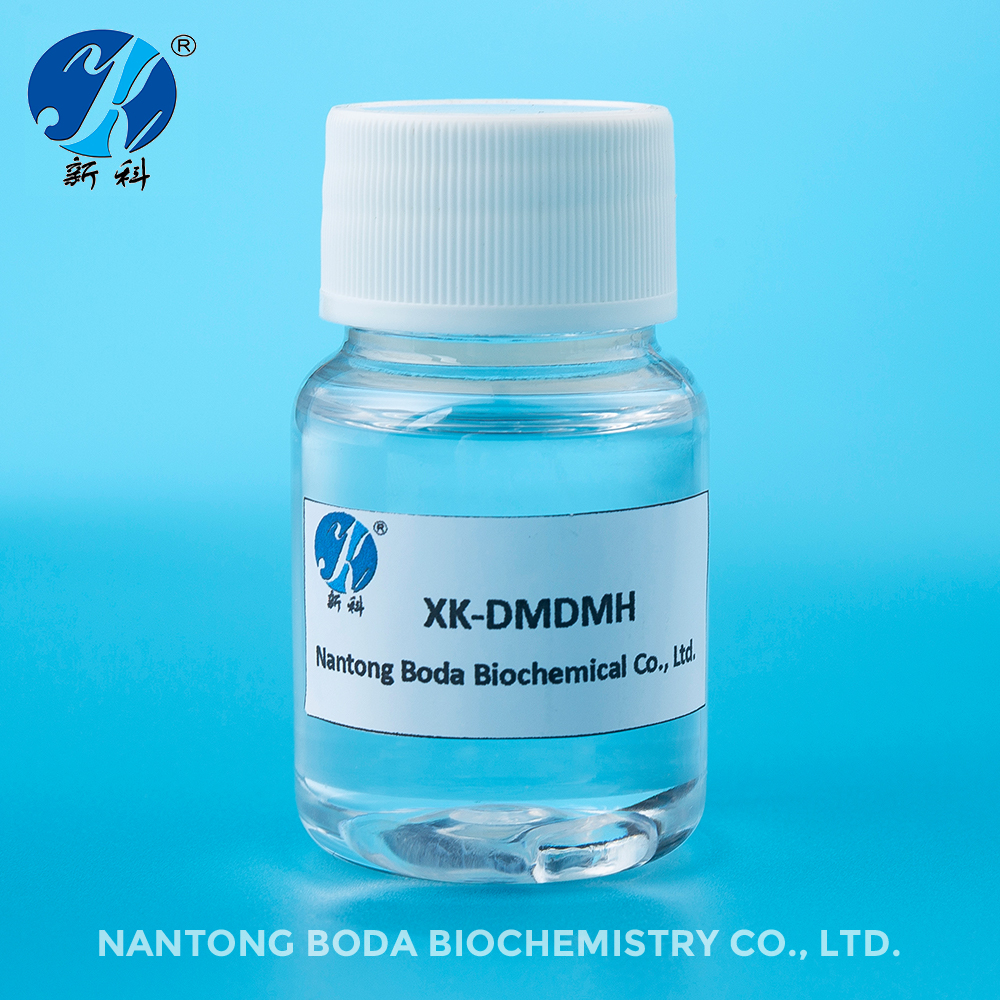 Wholesale DMDM Hydantoin(DMDMH Preservative) Manufacturers, OEM/ODM Suppliers - Nantong Boda Biochemistry Co.,Ltd. is China Wholesale DMDM Hydantoin(DMDMH Preservative) Manufacturers and OEM/ODM Suppliers, details:Thi...View Product →
Formaldehyde slow-release preservatives are a mature, cost-effective technology with a legitimate place in many formulations, provided they are used within legal concentration limits and documented thoroughly. The decision to keep or replace a donor should rest on three inputs: the regulatory requirements of every destination market, the brand's positioning on consumer trust, and the manufacturer's demonstrated ability to deliver consistent, tested material.
The practical next step is supplier selection. Shortlist antiseptic agents manufacturers that can provide test data, compliance files, and formulation support, then evaluate their samples in your own system. A direct producer with production experience and a responsive technical team is the safest counterpart for a preservative that carries both functional value and public scrutiny.
Wood Preservatives & Manufacturers Guide | Types, Uses & Supplier Tips
How to Pressure Treat Wood: Full Process, Equipment, and Preservative Guide
Your email address will not be published. Required fields are marked *
Industrial Deodorant
Penetrating Agent
Penetrating Agent
Disinfectant Liquid
Disinfectant Liquid
Antifungal Agent for Chemical Fiber Oil

Antifungal Agent for Chemical Fiber Oil
Antifungal Agent for Chemical Fiber Oil
Antifungal Agent for Chemical Fiber Oil
Dry Film Preservatives
Dry Film Preservatives
Dry Film Preservatives
 Request A Quote
